Caring for giants: The art of Giraffe hoof maintenance
Caring for giants: The art of Giraffe hoof maintenance
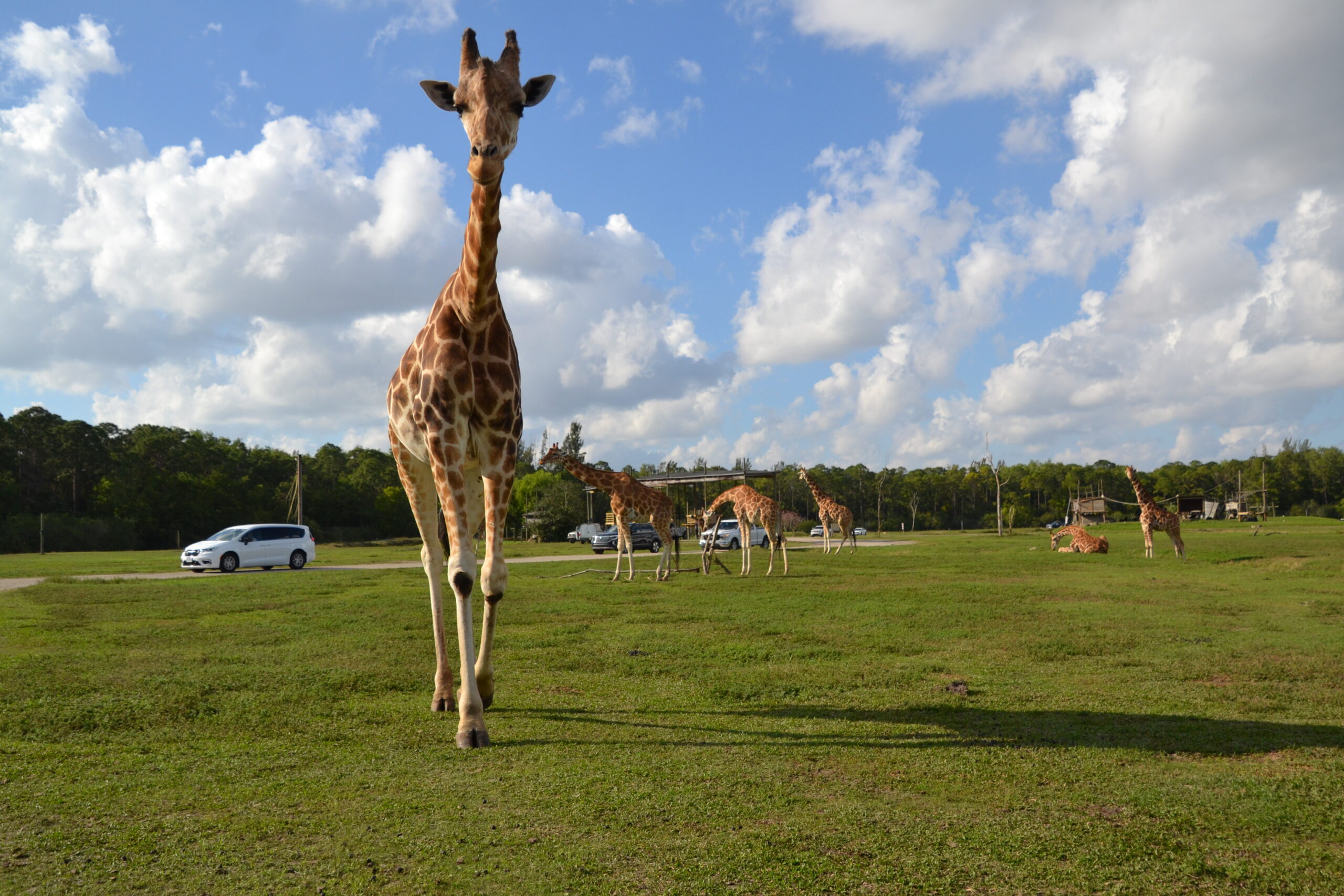
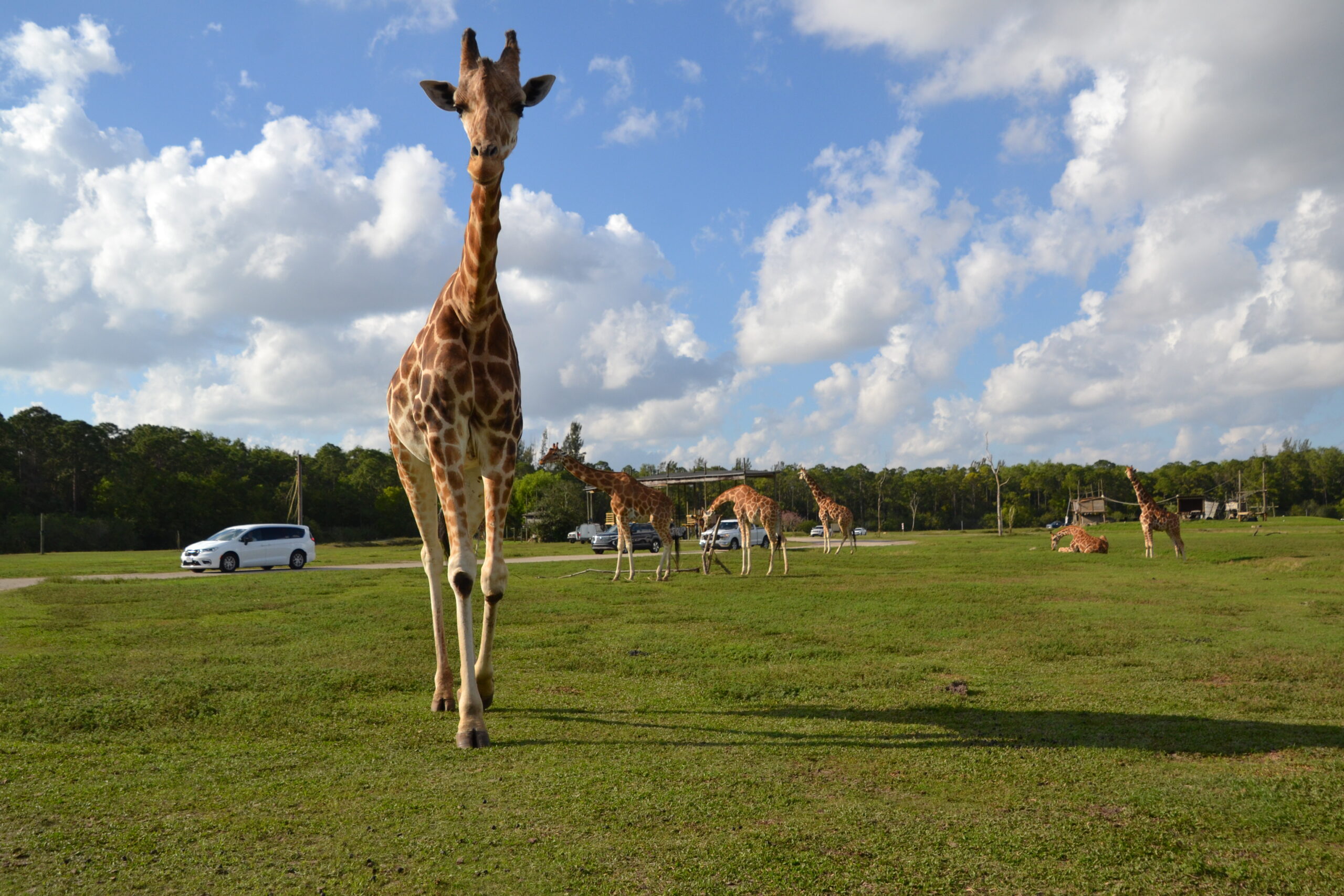
If you’ve ever spent a significant amount of time around giraffes, observing their behavior and how they interact with their environment and other living beings around them, then you may know they are wonderfully weird. Inanimate or not, anything new is highly suspicious, strange and potentially diabolical. So how on Earth do you persuade them to offer up a foot to be touched, filed, or trimmed with tools?
Trust and training.
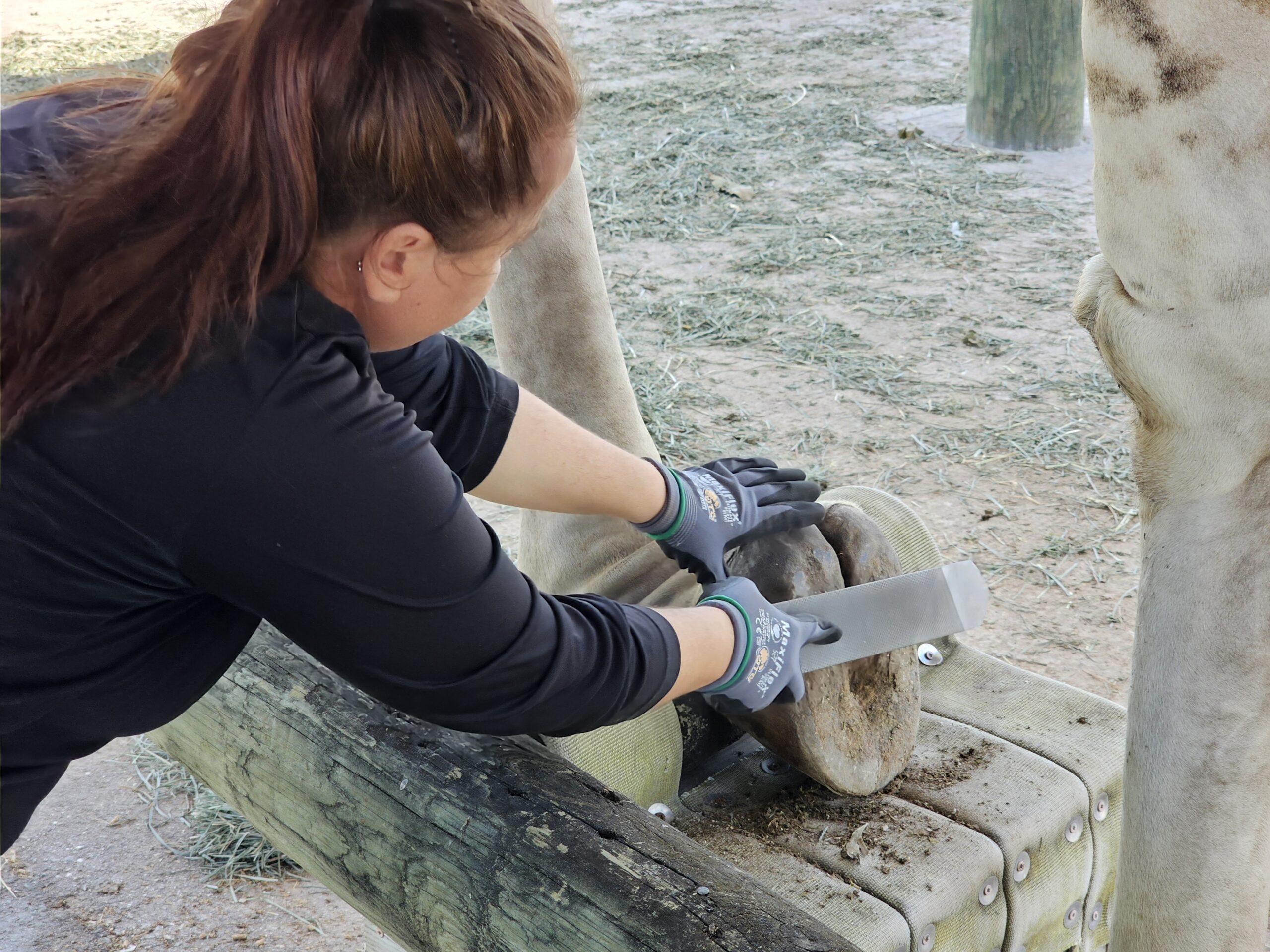
With expansive multiacre habitats, the giraffes naturally wear down the soles of their hooves on a variety of substrates as they would in the wild; however, with Florida’s abundance of rain in the wet season, the giraffes’ hooves do require some maintenance. Within the past two years, Lion Country Safari staff began focusing more intensively on training the giraffes to participate in voluntary hoof trims and radiographs. Beginning with individual giraffes who most needed foot work, it has been a slow and steady process to gradually increase the number of participants in the program.
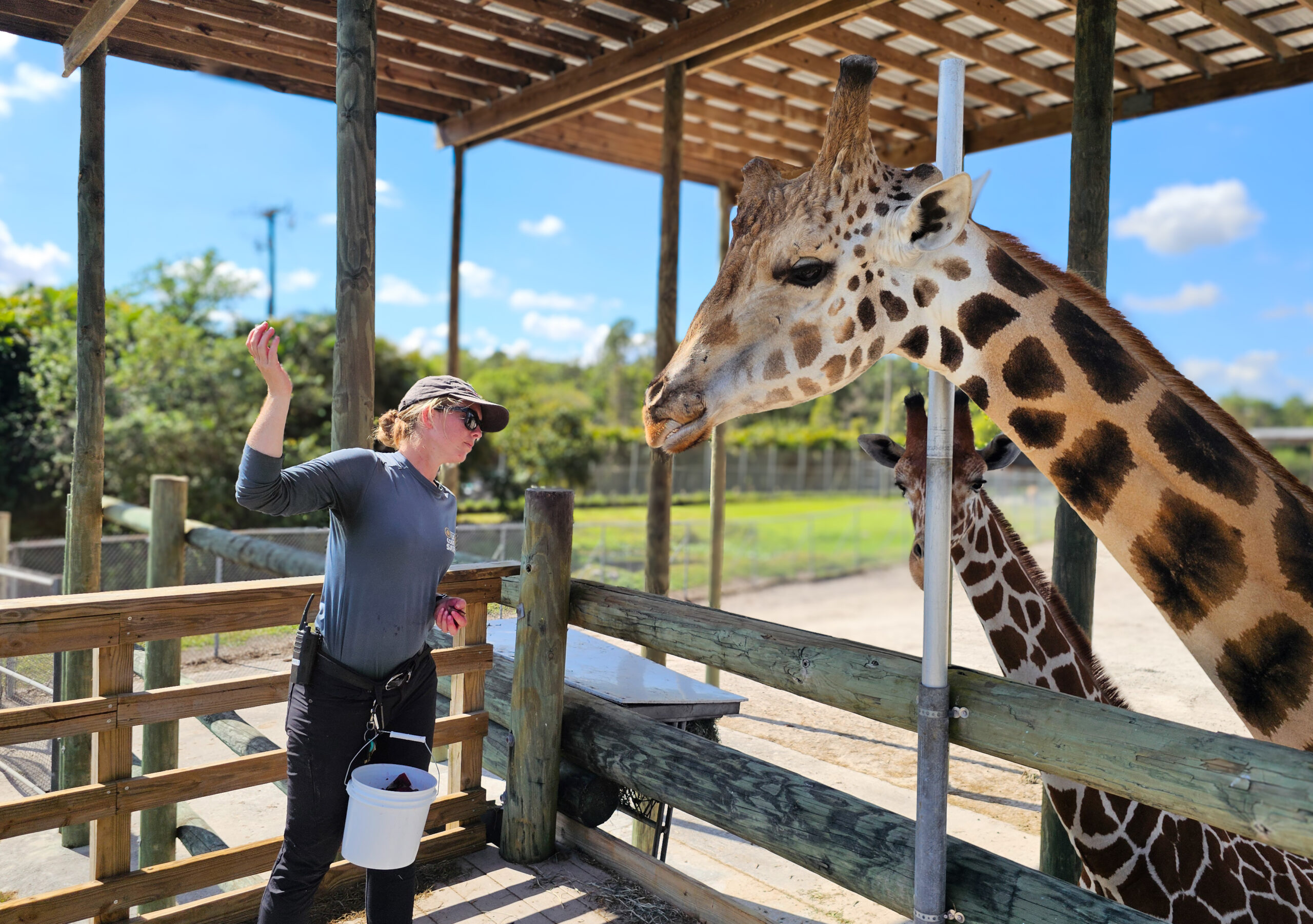
Relying on the relationship and trust between keepers and the giraffes, the team created a plan to shape the behavior of giraffes to voluntarily present their hooves on a specially made block. This process involves rewarding the giraffe with snacks (like sliced beets, sweet potatoes and bananas) handfed by the trusted keeper while trainers monitor the behavior and progression towards to next step, such as lifting a foot, to then placing a foot on top of the block. The ultimate goal is for the giraffe to curl their foot on cue to expose the bottom of the hoof and allow for cleaning, shaping or trimming without reacting to being touched.
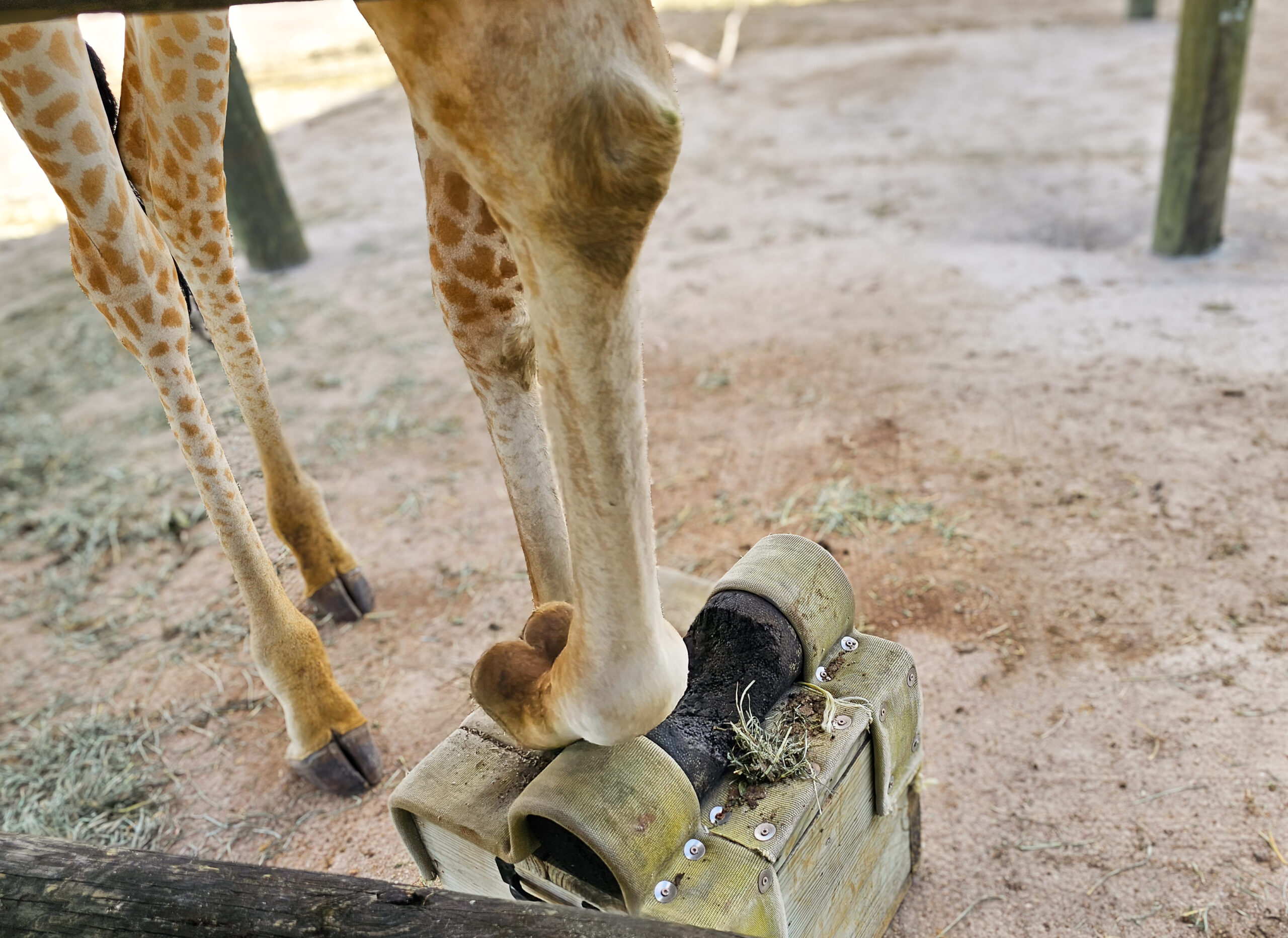
Training is always voluntary for the animals at Lion Country Safari and progression is slow for the animals’ comfort but engaging them to participate in their own health care and ensuring it is always a positive experience enables us to provide the best level of care for them. This type of training significantly reduces stress on the animal and the care team, fostering strong animal-keeper relationships and enhancing the well-being of wildlife.